
CASE STUDY
Difficult Gallbladder: Safe Laparoscopic Removal After Years of Attacks
Digestive health. Surgical expertise. Human connection. +91 88660 20505 · 24×7
Summary
A "difficult gallbladder" with dense scarring — removed safely by laparoscopic surgery without conversion to open.
- Procedure
- Laparoscopic Cholecystectomy
- Organ
- Gallbladder
- Condition
- gallstones
- 01
Presentation
A patient in their 40s with years of recurrent right-upper-abdomen pain, several past attacks of gallstone inflammation, and growing fear of a "big operation".
- 02
Investigations
Ultrasound showed a contracted, stone-filled gallbladder with a thick wall. MRCP confirmed a clear bile duct and mapped the scarred anatomy before surgery.
- 03
Findings
At surgery the gallbladder was densely adherent to surrounding structures from repeated inflammation — a classic high-risk "difficult gallbladder" where bile-duct injury risk is real.
- 04
Strategy
A critical-view-of-safety technique was used: structures were positively identified before any clip or cut, with a low threshold to convert to open if safety demanded.
- 05
Procedure
Meticulous laparoscopic dissection separated the inflamed gallbladder from the bile duct and achieved a complete laparoscopic removal — no conversion, no drain.
- 06
Outcome
Home the next day, pain-free, back to normal life within a week with three tiny scars.
- 07
Follow-up
Reviewed at two weeks — wounds healed, eating normally, no further attacks.
What this case teaches
Even a difficult gallbladder can usually be removed safely by laparoscopic surgery when approached with the right technique and patience.
Watch
Related videos
WHY DWARIKA HOSPITALABOUT THE HOSPITAL
Four promises.
One standard.
What every patient can expect here — from the first call to the last follow-up.
01.
Super-specialist led
Surgery here is performed by MCh-qualified surgical gastroenterologists, not general surgeons operating outside their specialty.
02.
Keyhole by default
Laparoscopic and scarless techniques are the standard approach, reserving open surgery for cases that genuinely need it.
03.
One team, one plan
Diagnosis, surgery, nutrition and follow-up sit under one roof — you are not handed between disconnected clinics.
04.
Counselling before consent
Every patient is told what the operation can and cannot achieve, with costs stated upfront, before anything is scheduled.
RELATED TREATMENT
This case is an example of
gallbladder stone.
Read what the treatment involves, who it is for and what recovery looks like.
PATIENT EDUCATIONALL LAPAROSCOPIC CHOLECYSTECTOMY GUIDES
Learn more about
laparoscopic cholecystectomy.
Doctor-written guides from Dr. Avinash Tank's medical-education library — understand the condition before you decide on treatment.
These articles live on dravinashtank.in, Dr. Avinash Tank's own site, and open in a new tab.
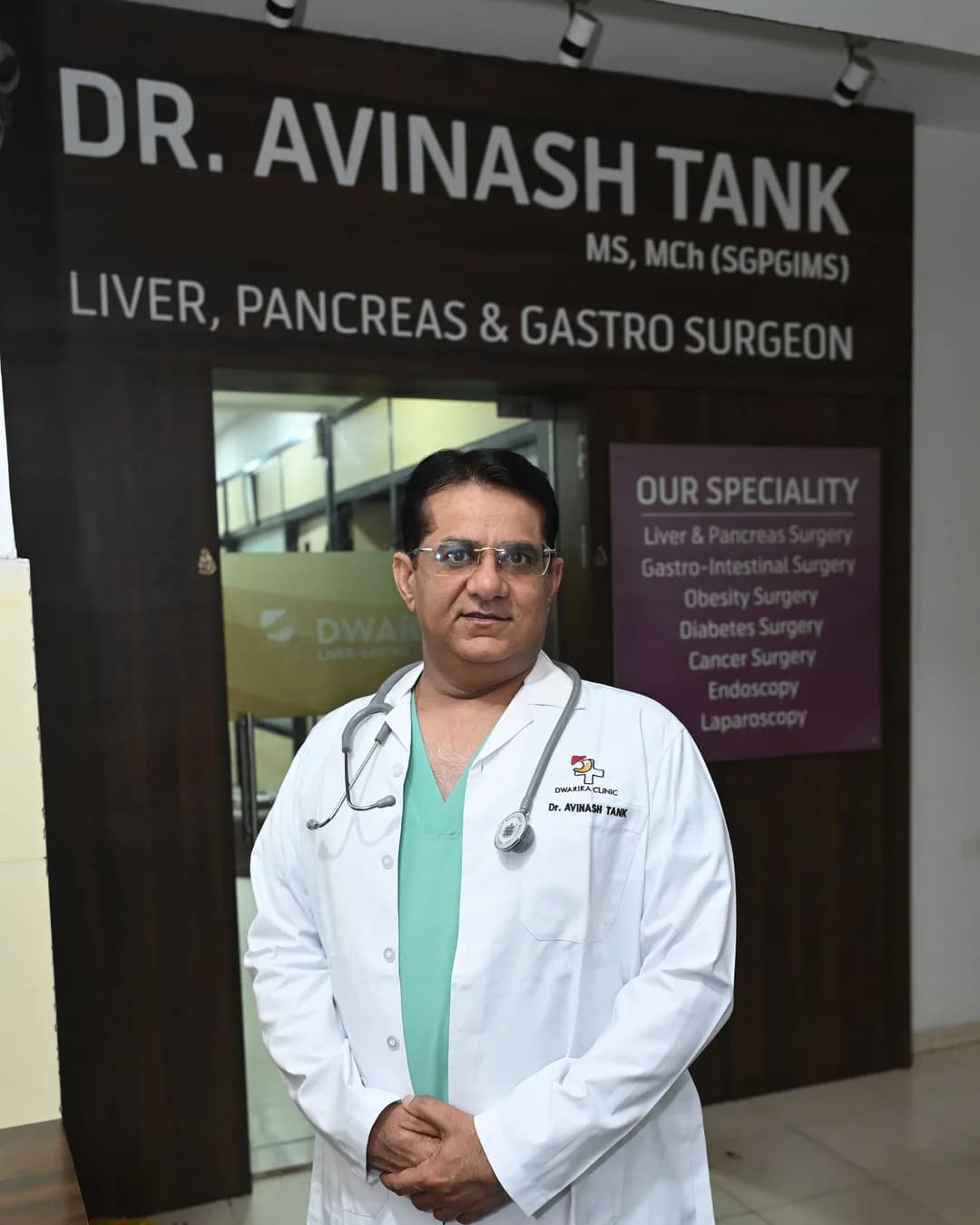
Dr. Avinash Tank
Director & Chief Surgical GastroenterologistTHE SURGICAL TEAM BEHIND THIS CASE
Experienced hands.
A familiar face.
Meet Dr. Avinash Tank, the surgeon leading Dwarika’s team. Trained at SGPGIMS — India's premier GI institute — with advanced fellowships in Japan and South Korea.
MCh · SGPGIMSFellowships in Liver, Pancreas & Bariatric SurgeryInvited faculty · ASIRAJ 2026
- 25+
- Years of surgical practice
- 10,000+
- Bariatric & GI surgeries in his career
Figures reflect Dr. Avinash Tank’s career record, as published by his practice.
WATCH · LAPAROSCOPIC CHOLECYSTECTOMYFULL VIDEO LIBRARY
Laparoscopic Cholecystectomy,
on film.
Operations, patient stories and surgeon explainers for this procedure.
TALK TO A SURGEON
Having recurring gallstone
pain?
Bring your reports. The surgeon will examine you, explain the options and tell you plainly whether you need treatment at all.
EVERY STEP, TOGETHER
A little clarity.
A lot of reassurance.
Knowing what comes next makes all the difference. Explore your journey, from the first conversation to care after you go home.
Your guide to patient careCall, WhatsApp or use the form. Bring any scans, reports or endoscopy results you already have — it usually saves a visit.
Your next chapter.
Let’s begin.
Book aconsultation